

Turtle Cake

If you haven’t heard of them before, Turtles (which are sometimes called Pixies) are candies made of chewy caramel and crunchy pecans that are covered in chocolate. This Turtle Cake is based on that amazing flavor combination. With its moist and decadent chocolate cake, rich caramel buttercream, toasted pecans, and a drip of melted chocolate and caramel, this cake is perfect for any time you are looking for an indulgent treat.
***This post may contain affiliate links, which means we may receive a commission (at no extra cost to you) if you click a link and purchase something. We are a participant in the Amazon Services LLC Associates Program, an affiliate advertising program designed to provide a means for us to earn fees by linking to Amazon.com and affiliated sites. Click to see my full disclosure policy.***
Ingredients for Turtle Cake
- 2 cups (242g) all-purpose flour
- 2½ cups (499g) granulated sugar
- ¾ cup (92g) natural cocoa powder
- 1¾ tsp (7g) baking powder
- ½ tsp (3.5g) baking soda
- ¾ tsp (2g) salt
- ⅔ cup (120g) vegetable oil
- 3 large (150g) eggs
- ½ cup (120g) whole milk
- 1 Tbsp (15g) vanilla extract
- 1⅔ cup (360g) water, boiling
Ingredients for Turtle Cake Filling and Decorations
- 6 cups (900g) buttercream (i.e., a double recipe of my Italian Meringue Buttercream)
- 1 cup (320g) caramel sauce – use store bought or my fantastic homemade version (for buttercream)
- 1 cup (120g) chopped pecans, toasted (for filling)
- ½ cup (60g) chopped pecans, toasted (for decoration)
- ¼ cup (80g) caramel sauce (for drizzling over pecans in filling) – optional
- ¼ cup (80g) caramel sauce (for caramel drip)
- ½ cup (92g) semi-sweet chocolate, chopped
- ½ cup (120g) heavy cream
Equipment:
- Digital scale (or dry measuring cups, liquid measuring cup, and measuring spoons)
- Stand mixer (or hand mixer and a large bowl) – use the paddle and whisk attachments
- Two 9-inch round cake pans
- Parchment paper (I like to use precut parchment paper sheets)
- Silicone spatula
- Wire rack
- Cake board or serving plate
- Offset spatula
- Turntable (optional, but helpful)
- Textured cake comb (optional)
- Piping bag (optional)
- Piping tip (e.g., 1M or other medium star tip) (optional)
- Squeeze bottle (optional)
Preparation Steps
Preheat the oven to 350°F/180°C with the rack in the center of the oven. Prepare the cake pans by greasing the bottom and sides and placing a sheet of parchment paper on the bottom of each pan. This will help release the cake from the pan after baking.
Making Chocolate Cake

Place the flour, sugar, cocoa powder, baking powder, baking soda, and salt into the stand mixer bowl (or a large bowl if mixing by hand) and use the paddle attachment to mix the ingredients together on the lowest setting until combined.

Slowly pour in the oil with the mixer running at low speed and continue mixing until all of the dry ingredients are moistened and crumbly.

In a liquid measuring cup or medium bowl, whisk together the eggs, whole milk, and vanilla. Slowly pour the wet ingredients into the stand mixer while it is running at low speed. The cake batter will be loose at this point. If you have a splatter shield for your stand mixer, use that now.

Slowly pour the boiling water into the stand mixer and mix just until combined. The cake batter will be very liquid at this point and it has a tendency to splash a little while mixing. Be careful since the water is hot. If it splashes too much, remove the bowl from the stand mixer and combine by hand with a spatula until all of the cake batter has been liquified.
Baking the Chocolate Cake
Gently pour the batter into the prepared cake pans and bake the cakes on the middle oven rack for 25-30 minutes or until a toothpick inserted into the center comes out clean.
Cool the cakes in the pans on a cooling rack for 15 minutes before turning the cakes out to finish cooling completely.
Making Caramel Italian Meringue Buttercream


Start with approximately 6 cups (900g) of room-temperature unflavored Italian Meringue Buttercream. Add approximately 1 cup (320g) of room-temperature caramel (or an amount to your taste) and stir with a spatula to combine. Keep in mind that the more caramel you add, the looser the buttercream will be. If the ingredients are not at room temperature, you will end up with very soft or melted buttercream (if using hot caramel) or chunks of caramel that do not fully incorporate into the frosting (if using cold caramel or buttercream).
Assembling the Turtle Cake with Caramel Buttercream
If you have any cake humps/domes, use a serrated knife to level each cake. Then, cut each layer of cake in half to make 4 layers of chocolate cake.


Using an offset spatula, spread a small amount of buttercream in the middle of the cake board (or serving platter) to act as glue and place one cake layer on top of the board. Smooth a thin amount of buttercream over the top of the cake layer and pipe a dam or ring of buttercream around the edge of the cake. To do this, place some caramel buttercream into a piping bag (or plastic zip-top bag) and cut off the tip to leave a large hole. Then, squeeze the bag while moving your hand around the edge of the cake.


Place an even layer of toasted pecans in the middle and drizzle with a small amount of caramel (optional). Cover the pecans with caramel buttercream and smooth with an offset spatula. Then, stack the next layer of cake on top. Continue this process for the remaining layers of cake (i.e., 3 filling layers with 4 layers of cake).

Using a cake turntable (if you have one) and an offset spatula, frost the sides and top of the cake with a small amount of buttercream to trap the cake crumbs. This is called a crumb coat. It’s ok if this layer has a lot of crumbs in it. That’s the purpose of a crumb coat. Place the cake in the fridge for about 30 minutes or until the frosting has hardened or crusted.

Using a cleaned offset spatula, frost the sides and top of the cake using more caramel buttercream. Scrape the sides and top with the edge of your offset spatula to get a smooth finish. Then, use a textured cake comb to add a ridged pattern to the side of the cake.
Use the palm of your hand to gently press the toasted pecans into the bottom portion of the cake before the buttercream has crusted. The first time I made this cake, I added the pecans after the drips and the frosting was already hard. I had to use a torch to soften the frosting at the base. Adding the pecans now will avoid that hassle.
Place the frosted cake into the fridge for the buttercream to harden. This will be important for getting a nice drip.
Place the remaining caramel buttercream in a piping bag fitted with a 1M tip and set aside.
Making Chocolate Drip
Before finishing the cake decorations, you will need to prepare the toppings. Start by making the chocolate drip.
Place the chopped chocolate into a heat resistant bowl (metal or glass).
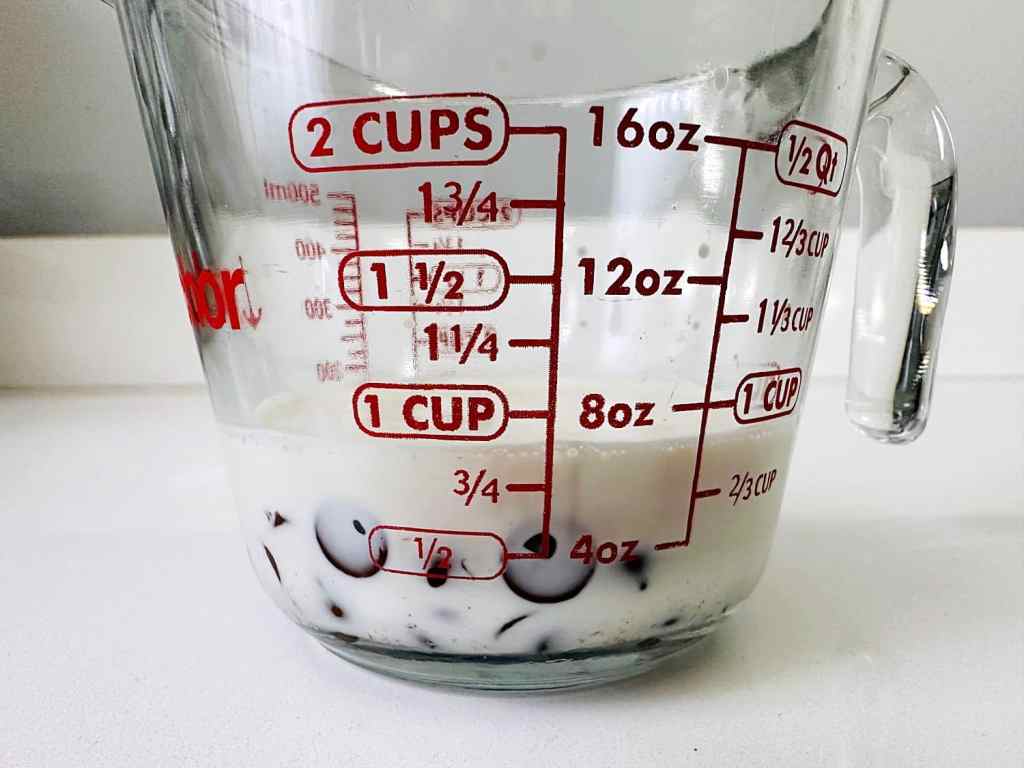
In a saucepan over medium-high heat or in the microwave, warm heavy cream until it just starts to simmer. You will know it’s ready when you start to see small bubbles around the edge of the pot. Pour the cream into your bowl of chocolate and let sit for about 30 seconds.


Use a spatula to mix the chocolate and cream together until it is smooth and glossy without any remaining chocolate pieces. This is now a liquid chocolate ganache.
Allow the chocolate ganache to cool at room temperature for 10-20 minutes. It should be close to room temperature or slightly above. If it’s too warm, the drips will melt the buttercream and pool at the bottom of your cake.
Finishing Turtle Cake Decorations
Place the cooled chocolate ganache into a squeeze bottle or a piping bag. This step is not 100% necessary since you could just spoon the chocolate onto the cake, but I prefer the look of the drips when I use a container to control the drips.
For the caramel drip, if your caramel sauce is liquid at room temperature, place the caramel into a piping bag/squeeze bottle. If it is solid at room temperature, heat it in the microwave in 5-second increments until the caramel is just soft enough to drip off the spatula. If the caramel is too warm, it will melt the buttercream and very quickly pour all the way to the bottom of the cake and you will have pools of caramel at the base rather than pretty drips.


Remove the cake from the fridge and place on the turntable. Using the caramel first, place the piping bag/squeeze bottle near the top edge of the cake and squeeze a small amount of caramel. Stop squeezing well before the drip reaches the desired length. The caramel will continue to drip. Move your hand over slightly and repeat the process around the entire cake. For my cake, since I wanted both caramel and chocolate, I left a large enough space that another drip could fit between the caramel ones.

Take the chocolate ganache and repeat the same drip process around the top of the cake with the chocolate.
Leave the middle of the top of the cake uncovered by caramel or chocolate.

Using the caramel buttercream, pipe 12 swirls on the top of the cake. To keep the swirls evenly placed, I like to start by piping the swirls at 12, 3, 6, and 9 (if thinking of the top of the cake as the face of a clock). 2 swirls will then fit between each of the original swirls. Finish by topping each swirl with chopped pecans and add chopped pecans to the middle of the cake as well.
Serving the Turtle Cake
Serve this cake at room temperature for the best flavor and texture. To get clean slices, dip your knife in hot water and wipe off any cake residue in between each slice.
Storing the Turtle Cake

Keep the turtle cake in an airtight container (e.g., a cake keeper or a covered cake plate). It will stay fresh up to 3 days at room temperature for up to 5 days in the fridge. If you store the cake in the fridge, allow it to come to room temperature before serving (i.e., let it sit at room temperature for at least 1 hour before serving). The butter in the frosting will harden in the fridge so it will have a crumbly and firm texture if eaten directly from the fridge.
Looking for More Cake Recipes?
Did you make this recipe?
I’d love to know how it turned out! Please let me know by leaving your thoughts below. Or snap a photo and share it on Pinterest or Instagram (@windycitybaker).

Chocolate Coconut Macadamia Nut Cookies
Equipment
- Cutting board
- Chef's knife
- Baking sheet
- Parchment paper (I like to use precut parchment paper sheets)
- Stand mixer (or hand mixer and a large bowl) – use the paddle attachment
- Digital scale (or dry measuring cups, liquid measuring cup, and measuring spoons)
- Silicone spatula
- Whisk
- Plastic wrap
- Wire rack
Ingredients
Ingredients for Turtle Cake
- 1½ cups + 3 Tbsp (238g) all-purpose flour
- ½ tsp (2.3g) baking soda
- 1 tsp (3g) salt
- ½ cup + 2 Tbsp (134g) light brown sugar
- 1¾ tsp (12g) unsulphured molasses
- ½ cup + 1 tsp (104g) granulated sugar
- ⅔ cup + ½ cup (214g) semi-sweet chocolate chips
- 12 Tbsp (167g) unsalted butter, at room temperature
- 1 large (60g) egg
- ½ cup (40g) unsweetened coconut flakes
- 1 cup (126g) macadamia nuts, raw
Instructions
Preparing Mix-Ins
- Preheat the oven to 350°F/180°C with the rack in the center of the oven. On a cutting board, use a chef’s knife to cut the macadamia nuts into bite-size pieces. Place the nuts and the unsweetened coconut flakes on a baking sheet lined with parchment paper. Toast the nuts and coconut in the oven for 5 minutes or until they begin to brown. Immediately remove the pan from the oven and transfer the nuts and coconut flakes to a bowl to avoid burning from the residual heat on the pan. Allow to cool to room temperature. Turn off your oven.
Making the Cookie Dough
- In a medium bowl, combine the flour, baking soda, and salt. Whisk all ingredients together and set aside.
- Place the softened butter in the bowl of your stand mixer (or a large bowl if using a hand mixer) and use the paddle attachment. Beat the butter on medium-low speed until it is the consistency of mayonnaise. This takes a couple of minutes and allows the butter to more easily mix with other ingredients.
- Next, add the granulated sugar, brown sugar, and molasses to the mixer and beat on medium-low speed for 3-4 minutes or until light and fluffy. Add the eggs and mix on low speed for approximately 15 seconds or until just combined. Scrape down the bowl to make sure all ingredients are mixed. If the mixture looks broken or curdled at this point, that is ok. It comes together after adding the dry ingredients.
- Add the dry ingredients in two additions (this decreases the risk of overbeating and making a mess in your kitchen) until combined.
- Fold chocolate chips, toasted coconut flakes, and chopped macadamia nuts into the dough using a spatula and incorporate any dry ingredients from the side of the bowl. Cover the bowl with plastic wrap and put it in the fridge to rest for 30 minutes.
Dividing the Cookie Dough
- While the dough is chilling, preheat your oven to 325F/165C and cover your cookie sheets with parchment paper or a silpat. For large cookies, divide your dough into 12 equal portions (i.e., approximately 90g per cookie). For smaller cookies, divide your dough into 24 equal portions (i.e., approximately 45g per cookie). Roll each portion into a ball and then place them on the cookie sheet. If you are making large cookies, you can only fit 6 on a tray at a time. Allow the cookie dough to come to warm slightly before putting in the oven. The dough should still be chilled, but not completely hard.
Baking the Chocolate Coconut Macadamia Nut Cookies
- Bake the cookies until golden brown, approximately 13-15 minutes for the smaller cookies and 16 to 18 minutes for the larger cookies. Rotate the baking sheets halfway through to allow for an even bake. Remove the cookies from the oven and cool for 10 minutes on the baking sheets before moving to a cooling rack to cool completely.


